

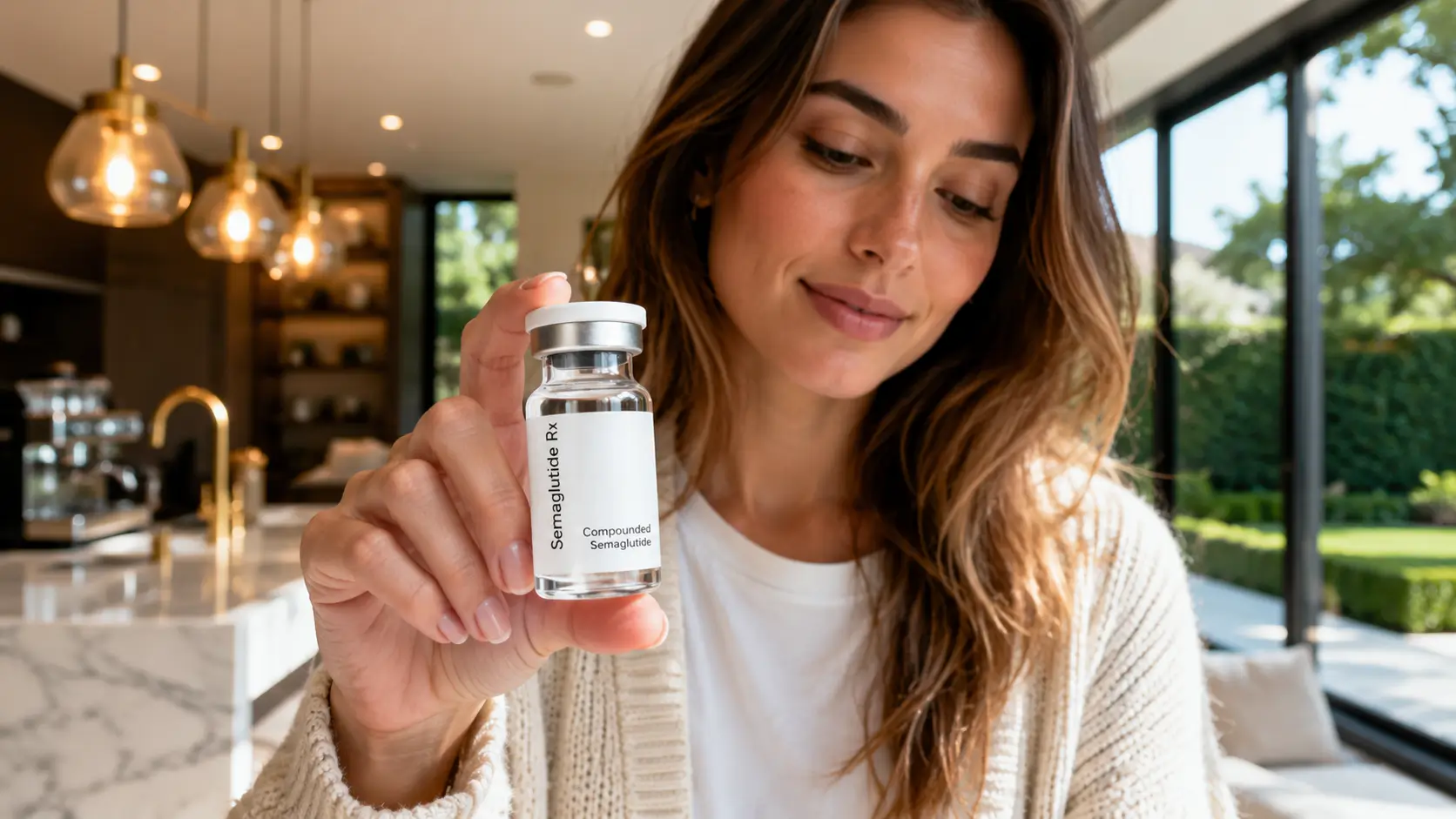
This article reflects our understanding as of early 2026. The compounded semaglutide landscape is changing quickly; the FDA links cited below are the authoritative sources to re-check before acting.
The short answer
The compounded semaglutide market that scaled rapidly during the 2022–2024 GLP-1 shortage has narrowed substantially. After the U.S. Food and Drug Administration removed semaglutide from its drug shortage list, the broad pathway that allowed large-scale compounding under FDA enforcement discretion was wound down. Personalized compounding under 503A pharmacies remains legally distinct but more constrained, and patients considering compounded versions in 2026 should be asking specific, verifiable questions before starting or continuing.
What actually changed
For roughly two years, branded semaglutide products — sold as Ozempic for type 2 diabetes and Wegovy for chronic weight management — sat on the FDA’s drug shortage list. Under federal compounding law, that listing created a legal pathway for compounding pharmacies to produce versions of semaglutide that would otherwise be off-limits because semaglutide is a patented branded medication.
In late 2024, the FDA determined that the semaglutide shortage was resolved. The agency subsequently announced wind-down timelines for compounded production, particularly at 503B outsourcing facilities, while litigation challenging the delisting moved through federal court. The practical effect: many telehealth programs that had built businesses around compounded semaglutide either pivoted to other GLP-1 medications, transitioned patients to branded products, or shifted sourcing to 503A pharmacies operating under more restrictive personalized-prescription rules.
The 503A vs 503B distinction, in plain language
U.S. compounding pharmacies operate under two different sections of the Federal Food, Drug, and Cosmetic Act, and the difference matters more than most patients realize.
- 503A pharmacies compound medications for individual patients based on a specific prescription. They are regulated primarily at the state level by state boards of pharmacy. They cannot manufacture in bulk for office stock.
- 503B outsourcing facilities are federally registered with the FDA and can produce sterile compounded medications in larger volumes for healthcare facilities and patients, with stricter manufacturing requirements closer to drug manufacturers.
The FDA’s enforcement discretion during the shortage period applied differently to each pathway. As of 2026, what a patient is offered as “compounded semaglutide” can mean very different things depending on which pathway produced it — and the legal and clinical considerations are not the same. For background, see the FDA’s overview of Compounding and the FDA: Questions and Answers.
What this means for you
If you were previously receiving compounded semaglutide and your program is continuing to offer it in 2026, that does not by itself mean anything is wrong. It does mean you should understand what you are actually receiving.
Compounded versions of semaglutide are not FDA-approved drugs. They have not gone through the same review process as Ozempic or Wegovy. The active ingredient may be sourced differently. Adjuvant ingredients — vitamins, amino acids, or other additives — may be combined with the semaglutide, which changes the formulation from what was studied in clinical trials.
None of that automatically means a compounded product is unsafe. It does mean the evidence base supporting compounded semaglutide is much thinner than the evidence base supporting branded semaglutide. A thoughtful clinician should be able to explain that gap clearly, without dismissing it and without overstating it. The FDA has also documented safety concerns and adverse events associated with compounded GLP-1 products during the shortage period.
Five questions to ask before starting or continuing
Before starting or continuing a compounded semaglutide regimen in 2026, the questions we would want answered are:
- Is this from a 503A or 503B pharmacy? Ask for the name of the pharmacy and verify its current license status with your state board of pharmacy. State boards maintain public lookup tools.
- Where is the active pharmaceutical ingredient sourced from? U.S.-based, FDA-registered API suppliers are preferable. A program that cannot or will not name the source is a yellow flag.
- What is the exact formulation? Pure semaglutide, or semaglutide combined with other ingredients? “Semaglutide + B12” or other blends should be specifically explained — including why they are being added and what evidence supports that combination.
- What is the clinical monitoring plan? Reputable programs require regular check-ins, lab monitoring, and clinician availability — not just a refill click. If you cannot reach a prescriber when something feels off, the program is incomplete.
- What is the plan if you have a side effect? A clear, named answer here separates programs built around care from programs built around fulfillment.
What the evidence actually shows
The randomized clinical trial evidence for semaglutide is large and well-established — but it was conducted with the branded products manufactured by Novo Nordisk. The STEP 1 trial, published in the New England Journal of Medicine in 2021, demonstrated meaningful weight reduction in adults with overweight or obesity treated with branded semaglutide. The SUSTAIN-6 trial, published in NEJM in 2016, established cardiovascular outcome benefits in adults with type 2 diabetes.
There is no equivalent body of randomized trial evidence specifically supporting compounded versions, particularly the “semaglutide + B12” blends and similar formulations that became common during the shortage. This does not mean compounded versions don’t work for many people — many patients have reported meaningful results. It does mean we are extrapolating from the branded-product evidence base, and that extrapolation has real limits.
How we’d think about the decision
If you are currently on compounded semaglutide and weighing what to do in 2026, our general framing for the decision is:
- Verify the legitimacy of the pharmacy and prescribing clinician. State pharmacy board lookups are public, free, and fast.
- Ask honestly about transitioning to branded semaglutide or tirzepatide if cost can be made workable through manufacturer savings programs, insurance coverage, or alternative payer arrangements.
- If you remain on a compounded version, build a relationship with a real prescribing clinician you can reach — not a portal, not a chatbot, not a once-a-quarter form.
- Watch for changes in the regulatory landscape. This area is moving; what was permissible in one quarter may not be in the next. The FDA shortage database is the authoritative source.
What we would not do
We would not make this decision based on price alone. Compounded semaglutide is often substantially cheaper than branded products, but the relevant comparison is not “branded versus compounded.” It is the all-in cost of a safe, effective, sustainable treatment plan — which includes clinician access, lab monitoring, the ability to titrate doses thoughtfully, and continuity of care when life intervenes. A monthly price tag that doesn’t include those things isn’t actually cheaper; it’s just a different cost structure.
Bottom line
The compounded semaglutide landscape in 2026 is narrower, more legally complex, and more scrutinized than it was in 2023. None of that makes compounded versions inherently unsafe, and many patients have legitimate, well-monitored access to them. But the questions you should be asking are sharper now — and a program that cannot answer them plainly is telling you something important about how it operates.
References
- U.S. Food and Drug Administration. FDA Drug Shortages database. accessdata.fda.gov
- U.S. Food and Drug Administration. Compounding and the FDA: Questions and Answers. fda.gov
- U.S. Food and Drug Administration. Medications Containing Semaglutide Marketed for Type 2 Diabetes or Weight Loss. fda.gov
- Wilding JPH, Batterham RL, Calanna S, et al. Once-Weekly Semaglutide in Adults with Overweight or Obesity. New England Journal of Medicine. 2021;384:989–1002.
- Marso SP, Bain SC, Consoli A, et al. Semaglutide and Cardiovascular Outcomes in Patients with Type 2 Diabetes. New England Journal of Medicine. 2016;375:1834–1844.
Medical disclaimer. The content on Mycare MD is for general informational and educational purposes only and is not a substitute for professional medical advice, diagnosis, or treatment. Always seek the advice of your physician or other qualified health provider with any questions you may have about a medical condition. Never disregard professional medical advice or delay seeking it because of something you have read on this site.
Status: pending medical review before publish. Per Mycare MD editorial standards, this article will carry a named clinician reviewer byline (Medically reviewed by …) and a last-reviewed date once review is complete.